Most travelers walk into a hotel room, drop their bags, and flop onto the bed. Careful travelers spend five minutes first. A hotel room safety check is a short, fixed sequence you run at every check-in, the same way flight attendants point out the exits on every flight, even for passengers who’ve flown a hundred times. The room is your home for the next few nights, and the first five minutes are when you confirm it can actually do that job: lock properly, alert you to fire, and give you a way out. Here is the full checklist, from choosing the room before you arrive to the habits you keep every day of your stay.
Choose Your Floor and Location Before You Unpack
Room safety starts at booking, or at the front desk, before a key is ever cut. When you can influence the assignment, ask for a room between roughly the third and sixth floors. Ground-floor rooms are the easiest for intruders to reach through windows and the most exposed to passersby, while very high floors can be beyond the reach of fire ladders in many places. The middle band balances both concerns.
Location within the floor matters too. A room near the elevator or a stairwell, without being directly beside it, means less empty corridor to walk alone and a shorter route out in an emergency. Avoid rooms at the far end of long, isolated hallways, and rooms next to fire exits that open from outside. If the front desk announces your room number out loud within earshot of strangers, it’s reasonable to quietly ask for a different room and a written number instead. That’s not paranoia; it’s a standard request staff hear all the time.
Run the Arrival Inspection Before You Settle In
The moment you enter, keep the door open with your luggage while you do a quick sweep, so you’re not locked into a problem room. Then close the door and work through the inspection in the same order every time.
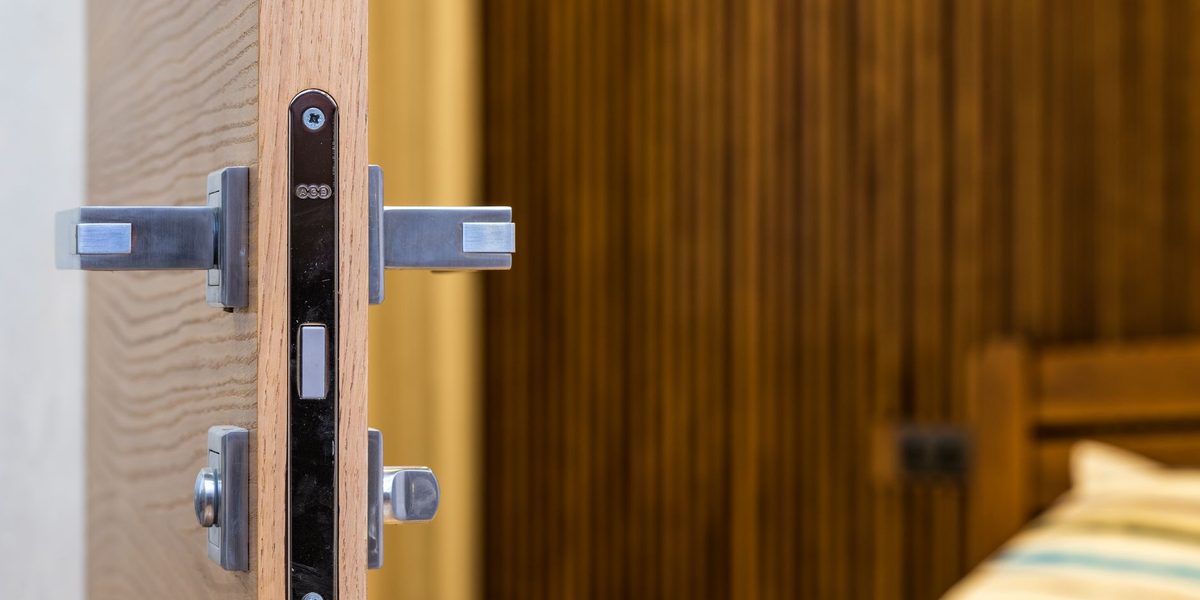
- Test every lock on the entry door: the main lock, the deadbolt, and the swing bar or chain. Each should engage smoothly and hold when you tug the door.
- Check the peephole. It should be intact, unobstructed, and not loose; a missing or reversed peephole is worth a call to the desk.
- Inspect the windows and any balcony or connecting doors. Confirm they lock, and that a connecting-room door is bolted from your side.
- Look behind the door for the fire evacuation map. Note where your room sits relative to the nearest exit.
- Find the smoke detector and confirm it’s present and appears powered. If it’s missing or dangling from wires, ask for another room.
- Do a quick scan of the room itself: closets, behind curtains, under the bed. It takes twenty seconds and settles the question completely.
If anything on this list fails, whether it’s a broken deadbolt, a window that won’t latch, or a dead smoke detector, call the front desk and ask for a repair or a new room. A hotel that shrugs at a broken lock is telling you something about the rest of its security.
Use the Room Safe Wisely
The in-room safe is a useful layer, not a vault. Use it for the things you can’t comfortably carry that day: a spare card, backup cash, your passport when local rules don’t require carrying it, and small electronics. Before you trust it, test it once: lock something worthless inside, close it, and open it again with your own code. Choose a code that isn’t your birth year or 0000, and check that a previous guest’s code isn’t still active by confirming the safe reads as ready for a new code.
Know its limits. Staff and managers typically have override access for guests who forget codes, which means the safe protects against opportunistic theft, not determined insiders. Truly irreplaceable items, primary documents when you must keep them with you, essential medication, are often safer on your person in a secure inner pocket. And build one habit that prevents the most common safe disaster of all: put your checkout reminder somewhere you’ll see it, because the most frequently “stolen” items from hotel safes are the ones guests simply left behind.
Build Door Security Habits for the Whole Stay
The inspection happens once; door habits happen every day. Whenever you are inside the room, engage every lock the door offers, including the swing bar or chain, not just the automatic latch. The secondary locks exist precisely because key cards can be duplicated, mis-coded, or issued in error, and they stop a door that’s opened from outside from opening more than a crack.
- Lock everything the moment the door closes behind you, every time, even for a two-minute shower.
- Use the peephole before opening the door, without exception, and use the swing bar as a barrier when you do open it.
- Consider a portable door lock or a rubber wedge alarm; both are small, inexpensive, and add a layer no key card can bypass.
- When you leave, some travelers keep the television or a light on so the room reads as occupied.
- Think before hanging the cleaning-request sign, since it announces an empty room; calling housekeeping directly does the same job quietly.
None of these habits takes more than a few seconds. Their power is in their consistency: they work because you never skip them, not because any single one is dramatic.
Walk Your Fire Escape Route Once
Reading the evacuation map is not the same as walking it. Within your first hour, step out of the room and physically walk to the nearest fire exit, counting the doors between your room and the stairwell as you go. In heavy smoke you may be crawling below the worst of it with your eyes nearly useless, and a counted number of doorways is something your hands can verify when your eyes can’t. Locate the second-nearest exit too, in case the first is blocked.
Open the stairwell door and glance inside to confirm it’s clear and lit. Back in the room, decide where your essentials will sleep: key, phone, wallet, and shoes in one consistent spot within reach of the bed, so leaving in a hurry, at night, in the dark, requires no searching. If an alarm sounds, take the stairs, never the elevator, and feel the door with the back of your hand before opening it; a hot door means keep it closed and signal from the window instead.
Handle Knocks, Calls, and Your Room Number
The final layer of room security is social. Treat every unexpected knock as unverified, no matter what the person announces. If someone claims to be maintenance, room service you didn’t order, or security, keep the door locked and call the front desk to confirm the visit before opening. Genuine staff are never offended by this; it happens dozens of times a week in every hotel.
Apply the same standard to the phone. A caller claiming to be the front desk who asks for your card number or personal details is running one of the oldest hotel scams there is; hang up and call the desk yourself. And guard the room number that makes all of this targeting possible. Don’t say it aloud in the bar or lobby, don’t write it where strangers can see, and don’t let new acquaintances walk you to your door. Your name plus your room number is exactly the pair of facts a stranger should never hold together.
Final Thoughts
Run the sequence at every check-in: a mid-floor room near but not beside the elevator, the six-step arrival inspection, a tested safe used for the right items, locks engaged every time the door closes, one real walk of the fire route, and a polite refusal to open for anyone unverified. The whole routine costs five minutes on arrival and seconds a day afterward. Do it enough times and it stops feeling like a checklist at all. It just becomes how you arrive.