Everyone who exercises away from home has lived some version of the same story: you arrive at the gym, open the bag, and discover the missing sock, the dead headphones, or the towel that is still in the dryer. One forgotten item can derail a workout, and a few derailed workouts can quietly kill a routine. The fix is not a better memory — it is a packed bag that runs on a system, the way a paramedic's kit or a carpenter's toolbox does: a fixed list of contents, a place for everything, and a restock procedure that resets the bag after every use. This guide builds that system from the bag outward, covering the core kit, the shower and locker room setup, the small extras that save the day, and the two-minute routine that keeps it all working. The gear list here is general-purpose; adjust it for your sport, and for any medical items your doctor has told you to keep with you, pack those first and always.
Step 1: Choose a Bag That Fits the Job
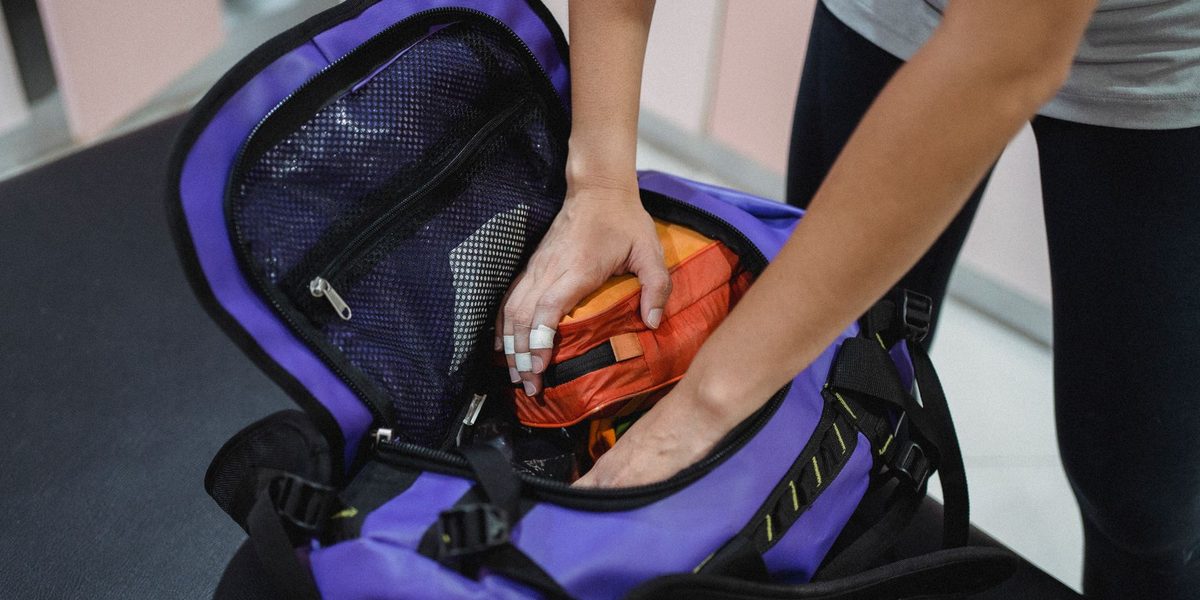
The bag itself is a tool, and the right one makes the whole system easier. Size it to your actual routine: if you shower and change at the gym before work, you need room for clothes, shoes, and a toiletry kit; if you drive home straight after, a much smaller bag does the job. Look for three features that matter more than brand or looks. First, a separate ventilated compartment for shoes and sweaty clothes, so the wet side of gym life never touches the dry side. Second, at least one quick-access pocket for the things you grab constantly — keys, lock, headphones. Third, a wipeable lining, because at some point a shampoo bottle will open itself.
A duffel with end pockets, a backpack-style gym bag, or a tote with internal organization all work. What does not work is a single cavernous sack where everything migrates to the bottom. If your current bag is that sack, a couple of zip pouches or packing cubes inside it will fake the compartments for almost nothing.
Step 2: Pack the Core Workout Kit
The core kit is what the workout cannot happen without, so it gets packed first and checked always. Build it as a fixed checklist.
- Complete change of workout clothes: shirt, shorts or leggings, socks, underwear, and a sports bra if you wear one — count the pieces every time, because socks are the single most forgotten item in gym history.
- Gym shoes, living in the ventilated compartment, with laces tucked in.
- Water bottle, filled before you leave or at the gym fountain.
- Sweat towel for equipment and face.
- Padlock for the locker, with the combination memorized or the key clipped inside the bag.
- Any personal training gear: lifting gloves or straps, a skipping rope, knee sleeves, swim goggles — whatever your routine uses.
Write the list once and tape it inside the bag's lid or save it in your phone. The written list is what turns packing from remembering into checking, and checking is the entire trick.
Step 3: Build the Shower and Locker Room Kit
If you shower at the gym, a self-contained toiletry kit is the difference between a smooth exit and a scavenger hunt. Use a small zippered pouch — ideally one that can hang from a hook, since gym shower stalls are famously shelf-free — and stock it with travel sizes: shampoo, body wash, deodorant, a comb or brush, moisturizer, and whatever your skin routine needs in miniature. Add flip-flops or shower sandals; locker room floors are communal spaces, and a cheap pair of sandals is the standard, sensible answer.
Pack a full-size towel if your gym does not provide them — a quick-dry microfiber towel packs to a fraction of the size of cotton — and a plastic or waterproof pouch for the wet towel and swimsuit afterward. If you head to work after training, add the office layer: the day's clothes folded or rolled, a small bag for the worn workout clothes, and any grooming items the morning requires. People who do this daily often keep the work outfit in a separate slim garment folder so shirts arrive presentable rather than crumpled.
Step 4: Add the Small Items That Save Workouts
Beyond the core kit, a handful of small, cheap items earn their place by rescuing sessions that would otherwise go sideways. Keep them permanently in the quick-access pocket.
- Headphones plus a charging cable, or a spare pair of cheap wired earbuds as backup — dead headphones end more workouts than sore muscles do.
- Hair ties and a headband, even if you personally need neither; someone in your life will.
- Adhesive bandages for the surprise blister.
- A small snack that survives a bag — a granola or protein bar — for the day the workout runs long and dinner is far away.
- A spare pair of socks, sealed in a small zip bag, as insurance against the classic failure.
- A few coins or a small card holder for lockers and vending machines that demand them.
This pocket is the bag's emergency kit. Restock it the moment you use something, exactly like a first aid kit, and it will quietly bail you out several times a year.
Step 5: Assign Every Item a Zone
A packed bag only stays functional if the contents have fixed addresses. Set up zones and never renegotiate them: shoes and anything sweaty in the ventilated compartment; clean clothes in the main body, rolled rather than folded so you can see everything at a glance; the toiletry pouch in its own corner or end pocket; electronics, lock, and valuables in the quick-access pocket; the water bottle in the outside sleeve so a leak cannot soak the clothes.
Zoning does two jobs. It makes the missing item obvious — an empty shoe compartment announces itself the moment you lift the bag — and it makes the locker room fast, because your hands learn where everything lives. When you find yourself digging, treat it as a signal that something has drifted out of its zone and reset it that evening.
Step 6: Run the Reset Routine After Every Session
The system's engine is a two-minute reset that happens when you get home, not on your way out the door the next time. The sequence is always the same. Unzip everything. Pull out the wet zone — clothes, towel, swimsuit — straight into the laundry, and leave the shoe compartment open to air. Check the toiletry kit and emergency pocket, and restock anything used or running low. Repack tomorrow's clean clothes from the drawer while you are standing there. Refill nothing liquid inside the bag; bottles get filled in the kitchen and added last.
Then stage the bag by the door or in the car. The staged bag is the whole point: tomorrow's decision is no longer do I have time to get ready but simply grab and go, and workouts survive busy mornings on exactly that margin. Once a month, empty the bag completely, shake it out, wipe the lining, and wash the bag itself if the label allows — a bag that smells like a locker room gets left in the closet, and then the system dies of neglect.
Step 7: Adapt the Load-Out to the Season and the Sport
Finally, review the load-out whenever your routine changes. Winter adds a beanie, gloves, and a dry base layer for the trip home; summer adds sunscreen, an extra shirt, and more water. Swimming weeks add goggles, cap, and a second towel; class-based training might add grip socks or a yoga mat strap. If you train outdoors, a compact rain shell and a phone armband join the kit. The checklist inside the lid gets a seasonal footnote rather than a rewrite — core kit always, plus the current season's add-ons.
If you carry medications your doctor wants nearby — an inhaler, an epinephrine auto-injector, glucose tablets — they live in the quick-access pocket, are checked in every reset, and outrank every other item in the bag. That is a matter between you and your doctor, and the bag's only job is to make sure their advice travels with you.
Final Thoughts
A gym bag that covers everything is not a bigger bag — it is a managed one: a written core checklist, a hanging shower kit, an emergency pocket, fixed zones for every item, and a two-minute reset that ends with the bag staged by the door. Set it up once on a quiet evening, run the reset after every session, and the forgotten-sock era of your training life simply ends. The bag becomes what good equipment always becomes: something you stop thinking about, so the energy goes into the workout instead.