A dead battery has a talent for terrible timing. It strikes in grocery store parking lots, in the driveway on the morning of an important meeting, and at trailheads miles from the nearest service station. The good news is that jump-starting a car is one of the most learnable skills in all of car ownership. It requires no mechanical background, takes about ten minutes, and follows a fixed sequence that never changes. Learn the sequence once, keep a set of cables in your trunk, and a dead battery becomes a minor delay instead of a ruined day.
Know the Signs of a Dead Battery First
Before you break out the cables, confirm the battery is actually the problem. A jump-start only helps when the battery lacks the charge to turn the engine over, so a minute of diagnosis saves you from solving the wrong problem. The classic symptom is a rapid clicking sound when you turn the key, or an engine that cranks slowly and sluggishly before giving up. Dim headlights, a dashboard that flickers weakly, or power windows that crawl are all supporting evidence.
If the engine cranks at full, healthy speed but never catches, the battery is probably fine and the issue lies elsewhere — fuel delivery, spark, or a security immobilizer. If absolutely nothing happens and there are no lights at all, check that the battery terminals are not loose or heavily corroded before assuming the worst. A terminal coated in crusty white or blue-green buildup can block current just as effectively as a dead cell.
Gather Your Equipment and Position the Cars
You need two things: a set of jumper cables in good condition and a second vehicle with a healthy battery. Inspect the cables before every use. The clamps should be clean and springy, and the insulation should be free of cracks or exposed wire. Longer, thicker cables are more forgiving because they let you position the cars naturally and carry current with less resistance.
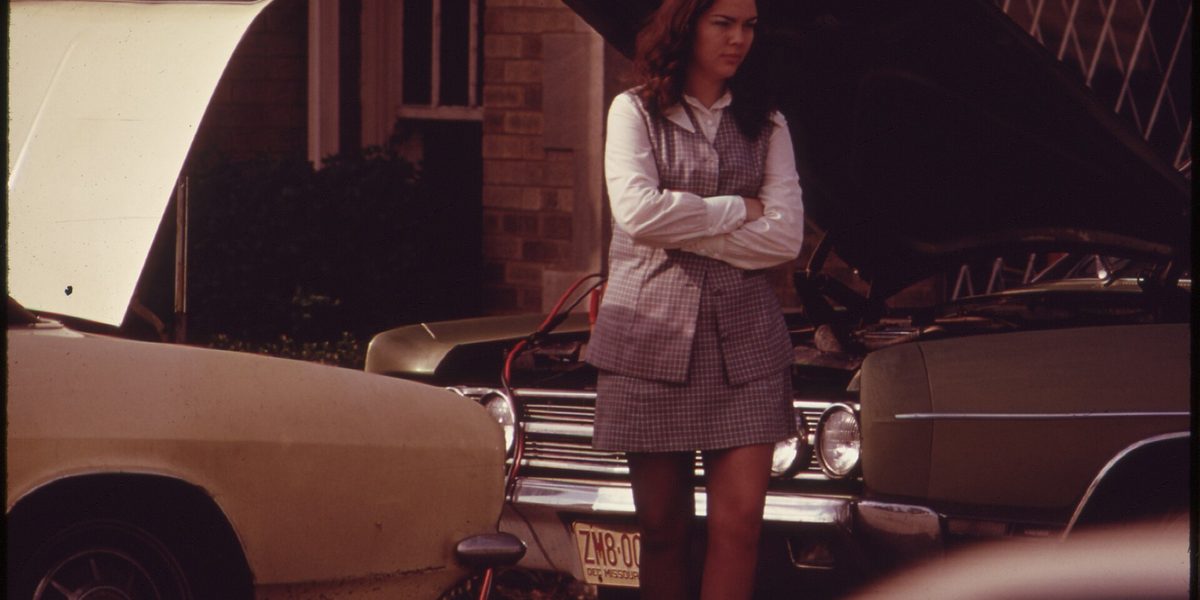
Park the working car close enough that the cables reach both batteries without stretching, but make sure the two vehicles never touch. Nose-to-nose or side-by-side both work. Then prepare both cars the same way: shift into park (or neutral with the parking brake set for a manual), turn off the ignition, and switch off headlights, interior lights, climate control, and the radio. Unplug phone chargers. Every accessory you turn off is one less draw on the fragile electrical moment to come.
Connect the Cables in the Correct Order
Cable order is the heart of safe jump-starting, and it exists for one reason: to keep any spark away from the battery itself, which can vent flammable gas. Follow this exact sequence:
- Attach one red clamp to the positive terminal of the dead battery. The positive post is marked with a plus sign and often has a red cover.
- Attach the other red clamp to the positive terminal of the good battery.
- Attach the black clamp on the good battery's side to the negative terminal of the good battery.
- Attach the final black clamp to an unpainted metal surface on the dead car's engine bay — a bolt head or bracket well away from the battery. This is your ground, and it is the step people skip most often.
Grounding the last clamp on bare metal instead of the dead battery's negative post means that the small spark that often occurs on the final connection happens at a safe distance from the battery. Keep the clamps from touching each other at every stage, and never let red and black clamps contact once any of them are connected.
Start the Engines the Right Way
With everything connected, start the engine of the working car and let it idle for two to three minutes. This gives the donor battery a chance to push some charge into the dead one, which makes the actual start attempt far more likely to succeed. Revving the engine gently to a fast idle can help, but there is no need to race it.
Now try to start the dead car. If it fires up, excellent — leave both engines running for a moment. If it cranks but will not catch, wait a few more minutes with the donor car running and try again. Crank in bursts of no more than ten seconds with a rest in between, because long cranking overheats the starter motor. If three or four attempts produce nothing, stop. Continuing to grind away will not fix a battery that is beyond rescue or a problem that was never the battery at all.
Disconnect in Reverse and Drive
Once the dead car is running, remove the cables in the exact reverse order of connection: the grounded black clamp on the revived car first, then the black clamp on the donor battery, then the red clamp on the donor battery, and finally the red clamp on the revived car. Keep the clamps apart as you go, and do not let them dangle into either engine bay where they could touch moving parts.
The revived car now needs to recharge, and idling in the driveway does that slowly. Drive for at least twenty to thirty minutes, ideally at highway speed with major accessories off, to let the charging system do meaningful work. Avoid shutting the engine off at a quick stop along the way — if the battery was deeply drained, one short drive may not be enough to guarantee the next start.
Mistakes That Turn a Jump-Start Dangerous
Most jump-start mishaps trace back to a handful of avoidable errors. Run through this list before you clamp anything:
- Reversing polarity. Connecting red to negative or black to positive can damage electronics in both cars. Double-check every terminal marking before you clamp.
- Letting clamps touch. Live clamps that meet, or that brush against the car body, create an instant short.
- Jumping a damaged battery. If the battery case is cracked, bulging, leaking, or frozen, do not jump it under any circumstances. Call for professional help.
- Wearing dangling accessories. Loose scarves, lanyards, and jewelry have no place near a running engine bay.
- Smoking or open flame nearby. Batteries can vent hydrogen gas; keep every ignition source away.
It is also wise to check your owner's manual before your first jump. Some vehicles have remote jump posts under the hood instead of an accessible battery, and some hybrids and electric vehicles have specific procedures that differ from the standard sequence.
What to Do If the Jump Doesn't Work
A failed jump-start is information. If the engine still only clicks after several minutes of charging from the donor car, the battery may have a dead cell, or corrosion may be blocking the connection. Try wiggling and reseating the clamps for better metal-to-metal contact. If the car starts but dies the moment you remove the cables, the charging system — commonly the alternator — is a likely suspect, because the engine is running purely off the donor's power.
And if the battery keeps needing jumps every few days, stop treating the symptom. Batteries have a finite lifespan, and one that repeatedly drains is telling you it is finished, or that something in the car is draining it overnight. Have the battery and charging system tested; many auto parts stores will do this quickly and at no charge.
Final Thoughts
Jump-starting a car is a fixed recipe: confirm the battery is the culprit, position the cars, connect red-dead, red-good, black-good, ground-dead, start the donor, start the patient, disconnect in reverse, and drive to recharge. Practice the sequence mentally a couple of times and keep quality cables in your trunk. The next time a battery dies on you — or on a stranger two parking spots over — you will be the calm person who knows exactly what to do.