A cast iron skillet is the rare kitchen purchase that can outlive its owner. Pans passed down through families still fry eggs beautifully after decades of daily use — not because they were babied, but because someone understood the small routine that keeps iron happy. That routine is built around one idea: seasoning, the hard, slick layer of baked-on oil that turns raw metal into a naturally nonstick surface. Cast iron's fearsome reputation for being fussy is mostly myth. This guide explains what seasoning actually is, how to build it in the oven, how to clean the pan after cooking (yes, soap is allowed), how to rescue a rusty flea-market find, and the handful of habits that keep the surface improving for life.
What Seasoning Actually Is
Seasoning is not a flavor and not a coating you buy. When a very thin film of cooking oil is heated past its smoking point on iron, it undergoes polymerization — the oil molecules bond into a hard, plastic-like layer fused to the metal. Stack many of these micro-thin layers and you get the glassy black surface of a well-loved skillet: slick enough to release eggs, tough enough to shrug off metal spatulas, and protective enough to keep the iron beneath from rusting.
Understanding this changes how you treat the pan. Seasoning is damaged by long soaks in water, by harsh scouring down to bare metal, and by acidic foods simmered for a long time — and it is built by exactly two things: thin coats of oil taken past their smoke point, and plain old cooking with fat. Every batch of fried potatoes is a seasoning session in disguise.
Season a Skillet in the Oven, Step by Step
New pans usually arrive with factory seasoning, but a few extra layers improve any skillet, and a stripped or rusty pan needs the full treatment.
- Wash and dry completely. Scrub the pan with warm soapy water, rinse, towel it off, then set it on a burner over low heat for a few minutes to drive out every trace of moisture. Water is the enemy of the next step.
- Apply a thin coat of oil everywhere. Use a neutral oil with a high smoke point — canola, grapeseed, or vegetable oil all work. Rub it over the cooking surface, the outside, the handle, and the bottom.
- Wipe it almost all off. This is the step people get wrong. Buff the pan with a dry cloth until it looks like there is no oil left — the whisper of oil remaining is the correct amount. Visible oil pools bake into sticky, gummy patches.
- Bake upside down. Place the pan inverted on the middle oven rack, with foil or a tray on the rack below to catch any drips, and bake at a high heat — around the top of your oven's normal range — for an hour.
- Cool in the oven, then repeat. Two or three cycles produce a noticeably darker, slicker pan; a badly stripped pan may want four or five.
Expect some smoke and a hot-oil smell; run the exhaust fan and crack a window. The finished surface should be dark, matte-to-satin, and dry to the touch — never tacky.
Everyday Cleaning After Cooking
Here is the liberating truth: modern dish soap is mild and will not destroy seasoning. The old ban dates from an era when soaps contained lye. Clean the pan while it is still warm — stuck bits release far more easily than after it sits overnight. Scrub under warm water with a brush or the rough side of a sponge, with a small squirt of soap if the pan is greasy. For stubborn stuck-on food, simmer a little water in the pan for a couple of minutes and scrape with a wooden spatula, or scour with a handful of coarse salt and a paper towel.
What actually harms the pan is water over time, not soap in the moment. Never soak cast iron in the sink, never leave it to drip-dry, and never park it in the dishwasher. Dry it immediately and thoroughly with a towel, then set it over low heat for a minute or two until bone dry. Finish with the maintenance ritual that keeps seasoning alive: rub a few drops of oil over the warm cooking surface with a paper towel and buff until it barely shines. Thirty seconds, and the pan goes to bed protected.
Rescue a Rusty or Sticky Skillet
Rust looks tragic and is almost always fixable — one of the joys of cast iron is that the metal underneath does not care what happened to the surface. For light orange speckling, scrub with steel wool or a scouring pad and a paste of coarse salt and water until you reach gray metal in the affected spots, wash, dry on the burner, and run one or two oven-seasoning cycles. For a thoroughly rusted relic, scrub the entire pan to bare metal — patience and steel wool will get there — then wash, dry, and rebuild with three or more full seasoning cycles.
A sticky, gummy surface is the other common ailment, and it means excess oil was baked on in pools. Scrub the sticky patches down with a scouring pad and hot soapy water, dry, and re-season with properly thin, buffed-out coats. Flaking seasoning gets the same treatment: scrub the loose flakes away and rebuild. There is essentially no cosmetic condition that ends a cast iron pan's life — only cracks or deep pitting through the metal itself retire one.
Cooking Habits That Build (or Erode) Seasoning
- Preheat gradually. Cast iron holds heat magnificently but heats unevenly; give it a few minutes on medium before food touches it, and add fat before the food.
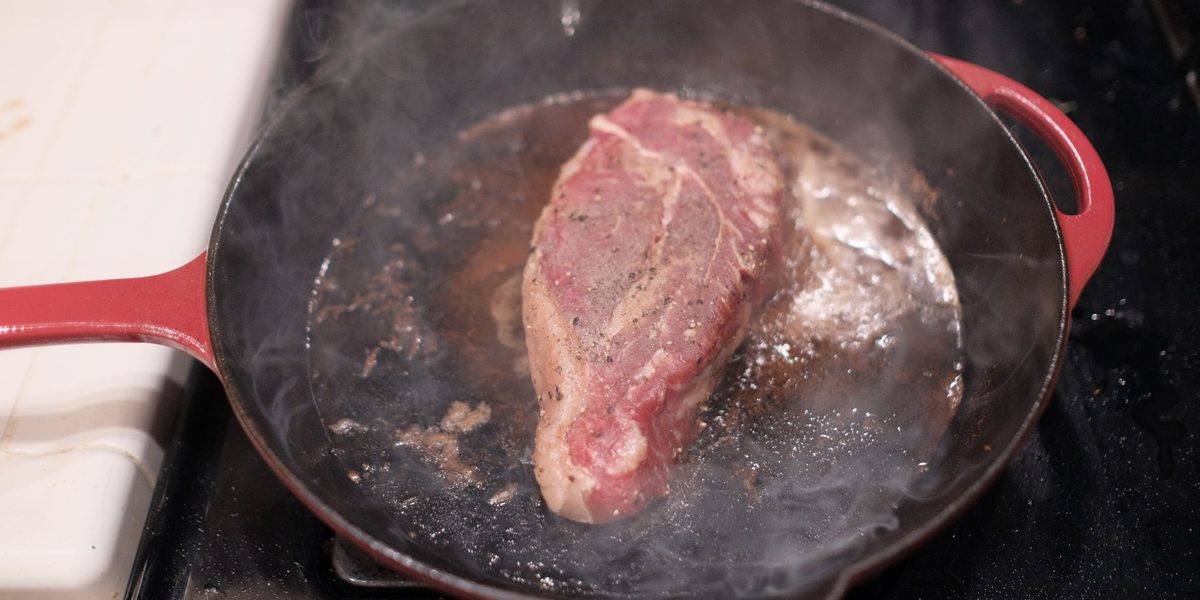
- Fry and sear often. Bacon, fritters, cornbread, and roasted vegetables all deposit new seasoning as you cook. A new pan gets better fastest on fatty foods.
- Go easy on long acidic simmers. A quick tomato pan sauce is fine on a well-seasoned pan; an hours-long tomato braise will dull the surface and can lend a metallic taste. Use enameled or stainless cookware for those.
- Delay delicate eggs. Eggs are the graduation exam, not the first lesson — attempt them once the pan has developed a slick, dark surface, with plenty of butter or oil.
- Metal utensils are fine. Good seasoning is chemically bonded; a spatula edge will not peel it off. Flaking indicates a seasoning problem, not utensil abuse.
Storage and Long-Term Ownership
Store the pan fully dry with its light coat of oil, somewhere with airflow — hanging, on an open shelf, or in a cupboard with the lid off if it has one. If you stack cookware, slip a paper towel or cloth inside the skillet to absorb ambient moisture and protect the surface. A pan used rarely should be checked seasonally: a quick wipe of oil and a few minutes warming on the stove keep stored iron from developing rust in humid months. Treated this way, the pan does not merely last — it improves, growing darker and slicker every year, which is why the best cast iron in any family is usually the oldest.
Final Thoughts
Cast iron care compresses into one sentence: keep it dry, keep it thinly oiled, and cook fatty things in it often. Season in the oven with coats so thin they look like nothing, clean it warm with a brush and even a little soap, dry it on the burner, and wipe it with oil before it rests. Do that, and a humble piece of metal becomes the best nonstick pan you own — and, eventually, someone's inheritance.