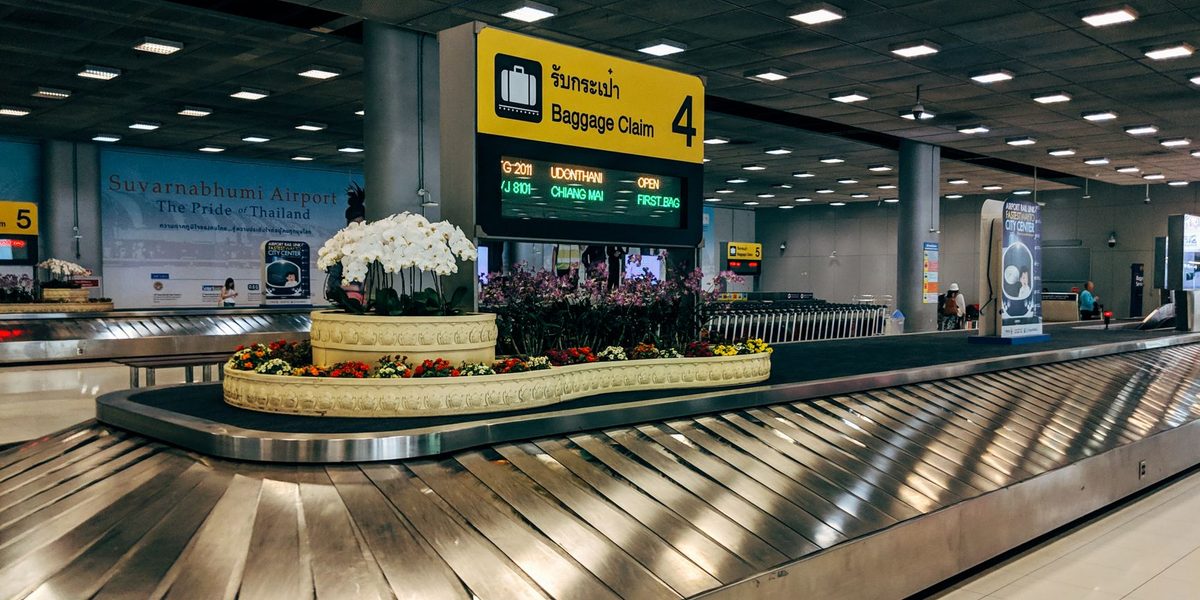
The carousel slows, the same three unclaimed bags circle past for the fifth time, and yours is not among them. A missing checked bag feels like a crisis, but it is actually one of the most process-driven problems in all of travel: airlines handle mishandled bags every day, the majority of delayed bags are reunited with their owners within a day or two, and there is a well-worn procedure that protects your rights and speeds the reunion. What matters is doing the right things in the right order — starting before you leave the baggage hall — and having packed in a way that makes the wait an inconvenience instead of an emergency.
First, Confirm the Bag Is Actually Missing
Before you report anything, rule out the routine explanations, because a bag reported missing while it sits at the oversize door only slows everything down. Wait until the carousel stops completely and the belt is switched off — late-loaded bags often arrive in a second wave. Check the oversize and irregular baggage area nearby, where anything strapped, fragile, or oddly shaped tends to be delivered by hand. Scan the floor around the carousel for bags pulled off by staff or fellow travelers, and glance at neighboring carousels in case of a display error or a flight-number mix-up.
Also look closely at any similar bags still circling: one common outcome is not that your bag is missing but that someone with an identical suitcase took yours and left theirs. If a lookalike bag keeps circulating, tell the baggage office immediately — its tag identifies who probably has yours, and that is a much faster case to resolve.
Go to the Baggage Desk Before You Leave the Airport
This is the single most important rule: report the problem in person, at the airline's baggage service office in the arrivals hall, before you exit. Reporting on the spot creates a record tied to your arrival, and many airlines restrict or complicate claims that are first raised after you have left the airport or after a short reporting window has passed. The desk belongs to the airline that operated your final flight, even if a partner airline sold you the ticket or handled the first leg.
- Your baggage claim tag — the sticker or stub you received at check-in, usually attached to your boarding pass; this number is how the system tracks your bag.
- Your boarding pass and ID, which connect you to the reservation.
- A description of the bag: color, size, brand type, and distinctive features; a photo of the bag on your phone is worth a hundred words here.
- A delivery address and phone number where you can actually be reached at your destination — hotel name, room booking, or host's address.
Stay patient and methodical with the agent. They did not lose your bag, and they are your best ally in finding it. Ask directly whether the system already shows where the bag is — very often it was simply left behind at the connection point and is already booked on a later flight.
File the Report and Keep Every Piece of Paper
The agent will file a formal mishandled-baggage report, sometimes called a property irregularity report, and give you a file reference number. That number is the key to everything that follows — tracking, delivery, reimbursement, and any later claim — so photograph the paperwork immediately and store the number somewhere safe in your phone as well.
- Confirm every detail on the report before you leave the desk: name spelling, phone number, delivery address, and bag description.
- Ask how the airline will deliver the bag when found — most deliver to your accommodation free of charge — and whether you must be present to receive it.
- Ask about interim expense policy right then: what the airline covers for essentials while you wait, how to submit receipts, and whether there is a daily arrangement or a reimbursement process.
- Get the tracking website or app address for your file number, plus a phone number for the local baggage office, since central call lines often know less than the airport desk.
- Keep the receipts for absolutely everything you buy while the bag is missing, no matter how small.
If your itinerary involved multiple airlines, note that responsibility typically sits with the final carrier, but keep all boarding passes from every leg — they establish the routing your bag was supposed to follow.
Track Actively While You Wait
Check the tracking reference at least daily, but do not rely on it alone; systems update unevenly, and a phone call to the local baggage office sometimes surfaces news the website has not caught up with. If your bag carried its own electronic tracker, share its location with the airline — a precise position can turn a vague search into a same-day recovery. When the bag is found, confirm the delivery address again, especially if you are moving between hotels; a bag chasing you across a multi-stop itinerary is how a two-day delay becomes a two-week one. If your plans move faster than the bag, ask whether it can be forwarded to your next stop or held for collection.
If days pass with no progress, most airlines ask you to submit a detailed contents inventory, which strengthens the search and becomes the basis of a claim if the bag is declared lost. Write it while your memory is fresh rather than waiting to be asked.
Buying Essentials: What Airlines Typically Cover
When a bag is delayed, airlines generally accept responsibility for reasonable interim expenses — the toiletries, underwear, and basic clothing you need until the bag arrives. The operative word is reasonable: replacing your toothbrush and a change of clothes is ordinarily covered, while a wardrobe upgrade is not. Policies differ by airline, route, and the rules that govern international carriage, so rely on what the desk agent told you and what the airline publishes rather than assumptions.
Spend conservatively, keep itemized receipts, and submit them through the airline's claim process with your file reference number. If the bag is ultimately declared lost — airlines make that determination after a defined search period — the claim converts from interim expenses to compensation for the bag and contents, which is where your inventory, your photos, and any receipts for valuable items inside become decisive. Travel insurance and some payment cards add their own layer of protection, so check those policies too; they often cover gaps the airline does not.
Prevention: Set Up the Next Trip to Survive a Lost Bag
You cannot control baggage handling, but you can control how much a mishandled bag hurts. Before your next trip, make your bag easy to identify and route: a sturdy external tag with your name and phone number, a copy of your itinerary with contact details slipped inside the bag where a finder will see it, and a distinctive strap or marker so nobody grabs it by mistake. Remove old airline tags and barcode stickers from previous trips, which genuinely misroute bags. Photograph the packed bag, open and closed, so you have both a description and a contents record, and consider dropping a small electronic tracker inside. Then pack strategically: medications, documents, chargers, valuables, one full change of clothes, and anything irreplaceable travel in the carry-on, always. A checked bag should only ever contain things you could live without for three days.
Final Thoughts
A missing bag is a process, not a catastrophe: confirm it is really gone, report it before leaving the airport, guard your file number, track actively, spend reasonably on essentials, and keep every receipt. Most bags come back quickly, and the ones that do not are covered by a claim path that rewards good records. Pack your carry-on as if the checked bag might vanish, and the worst version of this story becomes a minor subplot in an otherwise good trip.